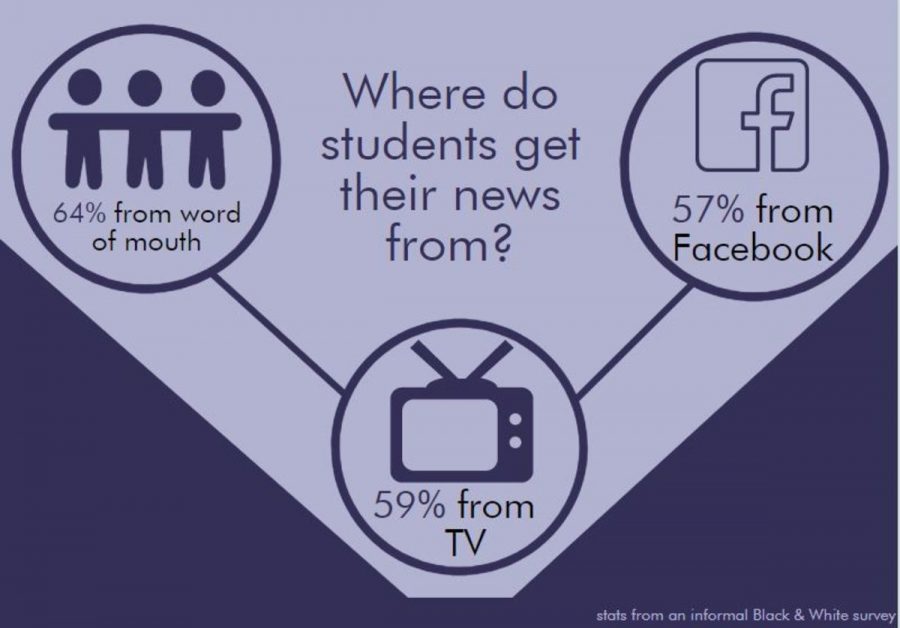
Nowadays, hundreds of millions around the world watches media regardless if it is TV channels, newspaper, or even information’s provided in the social network. So, it definitely can influence our world and society in many aspects whether politically or socially. It can even affect our morality. That is why media must always be objective. Unfortunately, media is a strong weapon used by the wrong people to serve their own benefits causing the manipulation of millions of people every single day. Media consumers should not believe all the information’s provided for them especially information about a sensitive topic such as politics and they need to check multiple sources in order the verifies the news credibility. Actually, there are many credible sources that support my thesis.
The begin with, one the sources that helped me most understand the reasons causing media bias is the article “Why objective journalism is a misleading and dangerous illusion” written by Rob Wijberg. The author started his article with an ethos: a quotation of Marcel Gelauff head of the Dutch public broadcasting company NOS’s news department. Then, he attacked the quotation credibility by saying it is a lie since Marcel Gelauff belong to the side of media. So, he will definitely defend it and he build the hole article based on that. First, to better understand the media situation Rob Wijberg illustrated the history of media and how science and technology affect it later. After making things clear, he gave three reasons why media can never be objective. The first one is that there is nothing called objective because the news presented is based on if the presenter think it is important or no. For example, the author says “Why does the news never open with the biggest, most powerful Dutch company Correspondents Maurits Martijn and Tomas Vanheste have written about Vitol: “Nobody’s ever asked a question in Parliament about this Dutch oil giant” (in Dutch only).in the world, the oil and gas trader Vitol? Because the editors take the position that Vitol isn’t doing anything wrong.
The reverse is true too: why does the news open with a Trump tweet, a bombing in Syria, a domestic policy proposal, chaos at a national transportation hub? Because the editors take the position that statements by a US president, wars in the Middle East, our own leaders’ plans, and travel snafus in our own country matter.” So, if the channel believes that an event is not important, they will simply not post it and they will publish only what they think it is important. The second reason is that objectivity by itself is a poor idea because it is understood in conditions of its moral dimensions. So, it is basically about us as a society and what we decide important, moral or not. The final reason is that objectivity can affect democracy because it needs to present all news and information whether if it is against or with government. The author obviously gave three strong reasons along with clear examples explaining why media is bias.
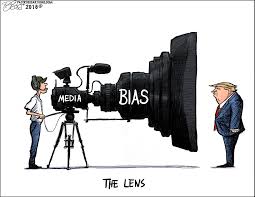
Another article that supports my thesis is “Electoral cycle bias in the media coverage of corruption news” written by Marco Le Moglie and Gilberto Turati. The authors suggest that media is corrupted, and it is used to promote for specific political members in elections. The article points out how media is affecting voters opinions by choosing to hide information’s that can hear some candidates reputation in order to give them higher chance to win the election. The authors illustrated the example of two Italian Newspapers: La Repubblica and Il Giornale and how each one of them promote for specific political party. The article contained some very strong logos based on mathematic statics. For example, when the author mentioned “Our dependent variables can take up only strictly positive and integer values by construction, since they record the number of articles about corruption scandals published in each date by the two newspapers. Linear regression is inappropriate for count data, as it fails to take into account the limited number of possible values of the response variable and its discrete nature. As showed in Fig. 1, regardless of the political orientation of the corruption scandals, the number of articles daily produced by the two Italian newspapers is far from being normally distributed”. The article gave a lot of credible logos to influence the audience. It clearly supports the thesis that I presented.
One more article that helped makes things clear is “Party Advertising in Newspapers” written by Jakob-Moritz Eberl, Markus Wagner & Hajo G. Boomgaarden and published in Tandfonline. The article is mainly explaining how newspapers are used to advertise some political parties. It suggests that politicians are influencing newspaper to promote for them in election giving the example of Austria, “in Austria in 2008, the Social Democrats’ lead candidate (and later chancellor) Werner Faymann was accused of having misused ads from state-owned companies to support his personal campaign. More generally, the Social Democratic party was suspected of trying to buy favorable coverage in tabloid media through advertising”. The article clearly explained the media situation and used a variety of ethos to support it.
Yet, the most source that supports my idea is the primary research that I conducted few weeks ago. It is basically a survey to see people opinion about media. Based on the survey results, there is a clear coloration between the people who watch media most and people who does not trust it. Obviously, the only people who trust media does not actually consume a lot of news, so, they are not knowledgeable about it. On the other hand, people who use media regularly do not trust it, which prove that they actually had seen fake news and information’s. That will proof that media is actually subjective.
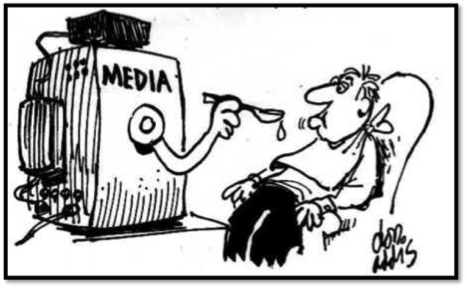
In conclusion, media is used to serve rich and powerful people benefits. That is why the audience must not believe all news and information provided for him and must check multiple sources. Some people suggest that we need to make organizations that watch media and control it to make sure it is objective. But, how can we know that those organizations are objective by them self and do not serve an alternative part?



 Fares review